
Working from home. Part 2 - Posture

'Sit up straight, at the dinner table', does that ring a bell? It was definitely a phrase my parents used to say, all the time! Fast forward a few years and I could still really do with that constant reminder! Do you find yourself laying bed with a few cushions to prop you up while browsing on your laptop? Or better yet lounging on the sofa with just the cushions behind your head? Maybe you try and sit at the table, but the height is just not quite right and you end up slouching or leaning in to get close? If we could see what was going on inside, we'd prioritise it much more than the work itself.


Folded neck,
Rounded back,
Flexed hip,
Closed/crossed legs
These are just some of the results that can occur from siting in these positions, maybe, you also add a twist as you lay on the side or turn to a printer/table. It is natural to focus on the pains and problems of the muscles and joints, but we can so easily forget the organs inside us.
Test this
Sit in a chair or slouch in the sofa, really slump! Now try to take a full breath. It feels tough and you can't get a full breath. Now sit up straight, opening up the body, try that same breath again and feel the difference. This isn't just about breathing, it's also about digestion and our ability to move food from the mouth to... well, we all know the ending of that journey. If you're someone that suffers from digestion issues, imagine if this simple fix could help!
How posture can change
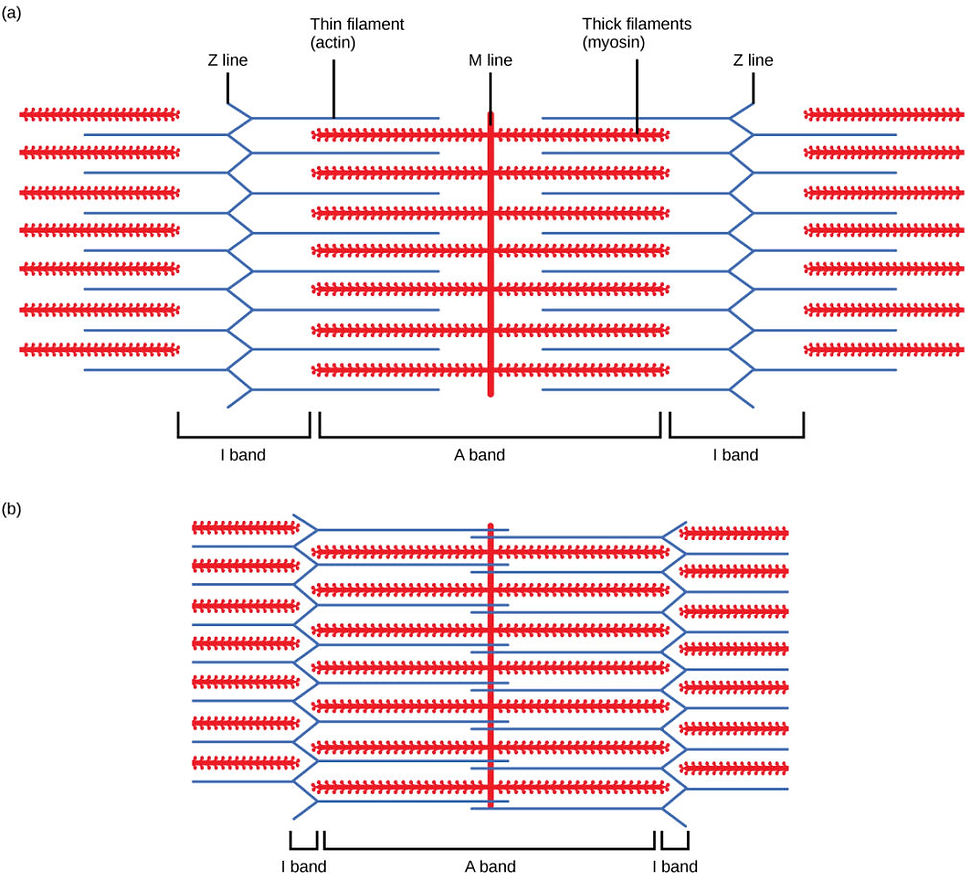
Our muscles work using the 'Sliding filament theory', where filaments overlap, but have enough space either side to effectively throw grappling hooks out and pull them closer, much like pirates pulling a boat closer ready to board..
Below is a diagram on a cellular level, imagine these connected together like an extremely long train to make up the length of the muscle. As it is in the image below (a) is the happy optimal state, and (b) is the shortened version.
Tight, Taught and Short
Muscles can become 'Tight' where they have the ability to lengthen but are short perhaps due to a workout or overuse, they have 'healed' in this short position otherwise known as DOMS (Delayed onset of muscle soreness). These fibres need some encouragement and help in lengthening, they need 'Stretching' back to the happy place.
On occasions muscles sometimes feel like they are tight, but because the opposing shortened/contracted muscles are pulling them longer they make the muscle 'taught'. All the stretching in the world does not fix a taught muscle, we need to address the muscles changing the posture and making it taught.
In addition to how we are born and grow affects our muscle length, over a period of time the body learns to adapt by changing its length to remain in this 'short' (or lengthened) position. This one needs a lot more 'Developmental stretching' to get back to where it was before or improve the length and range of motion.
So what does this mean?
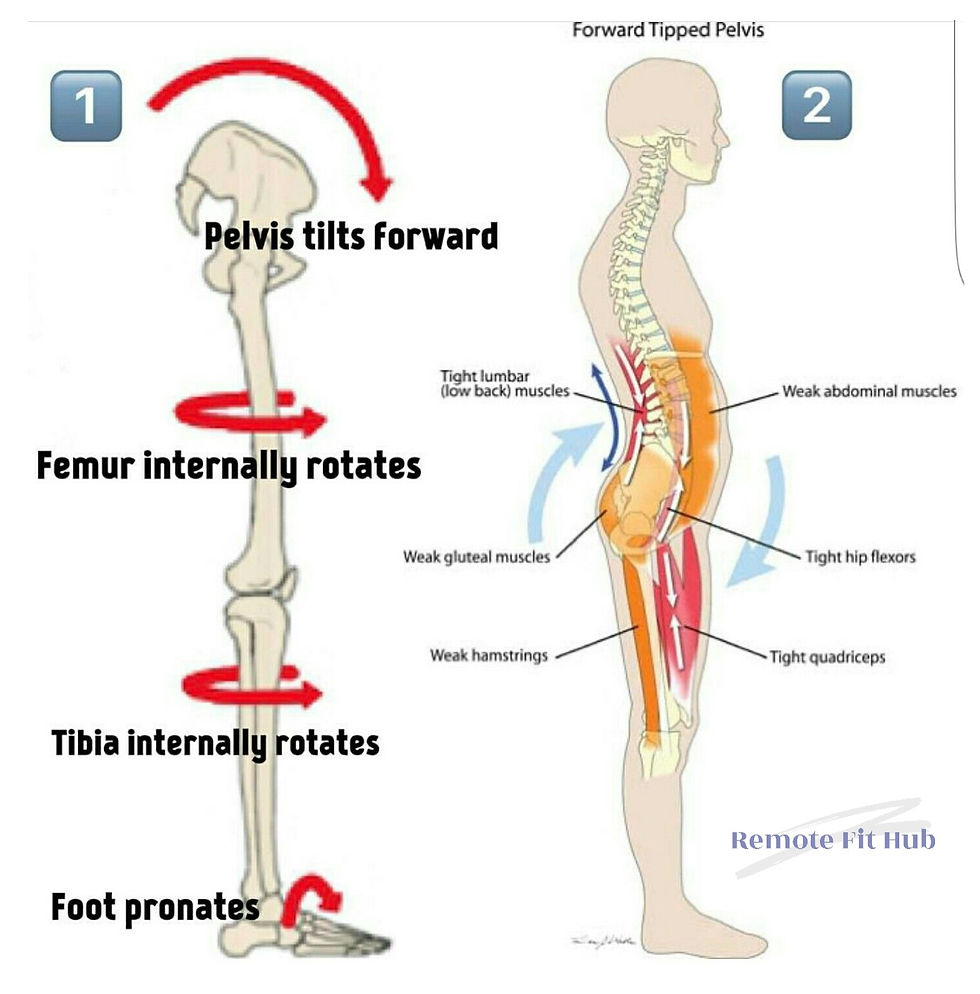
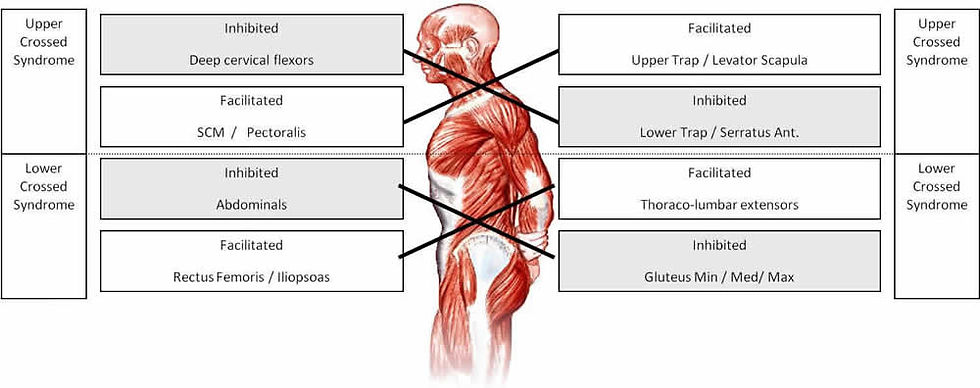
Lower cross syndrome - Hip flexor muscles pull the upper leg, lower back and hip closer together, creating a forward (anterior) tilt of the pelvis, to compensate this an excessive arch is formed in the lower back, the mid and upper back become rounded as a result. Opposing muscles such as Glutes and lower abdominals become lengthened, with a chain of events occurring.
Upper cross syndrome - For those of us rounding our upper back at the computer, the shoulders internally rotate with tightened chest muscles, the neck pushes forwards tightening the muscles of the neck, All of which changes the functionality of the neck and shoulder and puts pressure on the nerves that run down to the arm, increasing headache pain and a potential beautiful dowagers hump on the upper back as the body desperately tries to anchor the head.
To start with there might not be any occurrences of pain or discomfort, so we feel there isn't a problem, but give it time and there will be, the longer we leave it the harder it is to correct. Don't wait for a car to break down before fixing it, otherwise the problem (and cost) is much higher, act early and make some interventions and corrections now.
Check out Part 3 for some easy things to work on to help prevent some of these occurring. Or Book a free consultation to find out more about how we can help!
Comments